How Many Carbs And How Much Protein Should I Eat To Lose Weight
That also bled into the athletic world, where eating in this overly-restrictive way became the norm at the top levels of sport.
Even bodybuilders back in the day knew there must be a better way, and came up with an alternative “If it fits your macros” (IIFYM) approach.

The idea was that as long as the foods you were eating allowed you to hit specific amounts of the three main macronutrients (protein, fats, and carbohydrates), what those macronutrients came from didn’t matter so much.
Here's What 30 Grams Of Protein Looks Like
On the other hand, for many, it became a game of how much junk food one could eat whilst still hitting their ‘macros’.
As you can imagine, this would have meant lower intakes of micronutrient-rich foods like fruits and vegetables, leading to health and performance detriments, in spite of the continued physique improvements.
2. We can have flexibility in our food choices, allowing us to enjoy the overall nutrition plan, and improve adherence as a result.
Carbohydrates 101 For Runners
3. We still need to include plenty of healthy foods within our diet in order to optimise health and therefore, physique and performance.
For example, if your diet is currently at what you would consider 1/10, your priority might simply be getting yourself to eat regular meals, include more vegetables, and perhaps looking a bit more closely at your total calorie intake (which you can calculate here ).
But for someone who already has those things in a good place, getting more accurate with your macro intake can take things to the next level.
How Much Protein Should Rugby Players Eat?
For example, if you’re just hoping to drop a few kg of bodyfat, feel a bit healthier, and be able to run about the park, you’re not going to need to be as specific as a high-level GAA athlete, marathon runner, or someone hoping to get 6-pack abs.
In the second category, which many of the athletes I work with fall into, getting specific with these intakes is crucially important.
That will require that you track your food intake on a daily basis, at least for a few weeks, in order to assess your current intake, and adjust to a more suitable intake, based on the calculations we’ll get into next.
What Should Fill My Plate—protein, Veggies Or Carbs? // News // Campus Dining // University Of Notre Dame
It is also important to keep in mind that the total number of calories you consume daily is made up of the macronutrients you consume.
(They are also used in the creation of neurotransmitters like serotonin, dopamine, and norepinephrine, which are also crucially important when it comes to optimising physical and mental performance.)
In order to ensure that the “building up” of new muscle (A.k.a Muscle Protein Synthesis) equals or exceeds the breakdown, it is important to supply the body with sufficient amino acids, by eating enough protein, and doing so on a frequent basis.
Whey Protein Powder Nutrition Facts
Generally, the amount of protein you require will vary based on your goals, how much training you are doing, and how much muscle mass you have (which roughly correlates with your body weight.)
For most athletes, a recommendation of 2g per kg of body weight is a good target to aim for, in order to preserve/build muscle.
In order to calculate our fat and carbohydrate targets, we must also calculate how many calories will be taken up by protein.
Chicken Breast Macros, Calories, Nutrition Facts, And Benefits
Given that protein contains 4 kcal per gram, we can say that this athlete is getting 640 kcal (that’s 160 x 4) out of their 3000 kcal daily total from protein.
When we eat foods containing dietary fat, the fat is broken down into fatty acids, which can be used for energy, or stored in adipose tissue for later use.
As with our muscle protein, our body fat is continuously in flux, with fatty acids continuously being both released to be burned as energy, and being stored.
Your Guide To The Keto Diet
The balance of how much is released and burned vs. how much is stored is ultimately what determines how much body fat is gained overall.
This is almost completely a result of how much energy (calories) you take in vs. how much energy you have expended/burned over time.
In calculating how much fat you should be aiming to consume, it’s important to consume enough to cover the previously mentioned biological processes.
Visualising 30 Grams Of Protein In Everyday Foods
It’s also important to remember that the more fat you consume, the fewer carbohydrates you’ll be able to consume whilst staying within your calorie target.
Given the importance of carbohydrates for athletic performance, you may not want to have to reduce your intake of them, so controlling fat intake is also important for this reason.
With all these things taken into account, starting somewhere in the range of 0.8-1.2g per kg body weight would likely be close to optimal.
Macros: How Much Protein, Carbs, & Fat To Eat — Jaydigains
You could go towards the higher or lower end of that range based on preference, but for those on relatively lower calories (in a fat-loss phase for example), it would likely be better to edge towards the lower end, in order to allow room for enough carbohydrates and protein to be consumed, within your caloric target.
On the other hand, those who are aiming to increase caloric intake may want to go towards the higher end in order to make it easy to hit those higher calorie targets.

In order to calculate our carbohydrate intake, we then need to calculate how many calories remain once protein and fat have been accounted for.
How Many Calories Are In One Gram Of Protein?
Given that fat contains 9 kcal per gram, we can say that fat will contribute 720 kcal ( that’s 80 x 9) to our example athlete’s overall diet.
This means that protein and fat will contribute 1360 kcal (that’s 640+720) out of the 3000 kcal this 80kg athlete needs, leaving 1640 kcal (that’s 3000-1360) for carbohydrates.
This glucose is then circulated around the body, where it is either used to produce energy, or it is stored as glycogen, for when it’s needed (in high-intensity training, for example).
How Much Protein Do You Need After 50?
Given the high glycolytic (glucose-dependent) demands of sports and athletic endeavours, where there is a lot of intermittent high-intensity running, for example, it is important to have high levels of glycogen stored in the muscles, in order to optimise fuelling for performance.
In terms of calculating your recommended intake, we have done most of the work by calculating how many calories are left after calculating your protein and fat targets.
Given that carbohydrates provide around 4 kcal per gram, this 1640 kcal is equal to about 410g (that’s 1640 ÷ 4) of carbohydrate.
How Much Protein, Fat, And Carbs To Eat As An Athlete (gaa, Hurling, Football, Rugby, Golf, Running — The Everyday Athlete
However, based on the research, we also know that somewhere in the region of 3.5-6.5 g of carbohydrate per day is likely to be optimal for high-intensity sports.
However, there may be cases where the above calculations give you recommendations outside of this range, so you may need to manipulate other macros to get closer to this range.

For example, you may choose to decrease your fat intake target to allow you to consume more carbohydrates whilst staying within your calorie target.
Easy Ways To Increase Your Protein Intake
Carbohydrate: The rest of the calories = 1640 kcal / 4 = 410g/day (which also suits our recommended range of 3.5-6.5 g per kg bodyweight = 3.5-6.5 x 80 = 280-520g/day).
Using the article on calculating your recommended calorie intake targets (HERE ), you can now go ahead and calculate your own macronutrient requirements to optimise your performance and body composition for you as an everyday athlete.Between the different diet trends and conflicting research findings, it seems we’re more confused than ever about what and how much to eat, particularly when it comes to the three key macronutrients: protein, carbohydrates and fat. While there’s no one magic combination that will make the pounds melt off, you can optimize your diet for weight loss by adjusting the composition of your calories.
When it comes to choosing what to eat more of and what to cut back on for weight loss, consider first what you want to achieve. The goal of losing weight is to reduce fat stores while preserving, or even adding, lean tissue — what we refer to as muscle.
How To Track Your Carnivore Diet Macros For The Best Results
Carbohydrates are an important source of fuel for our muscles during exercise and are the only source of energy for our brain and red blood cells. Fat is equally important, playing major roles in everything from brain function to cell structure, but if you’re trying to lose weight, it may not hurt to trade some carbohydrates and/or fat calories for a boost in protein. Calorie for calorie, protein has the most metabolic benefits for weight loss: it increases satiety, stimulates energy expenditure and preserves muscle, which unfortunately is used for energy along with fat during weight loss.
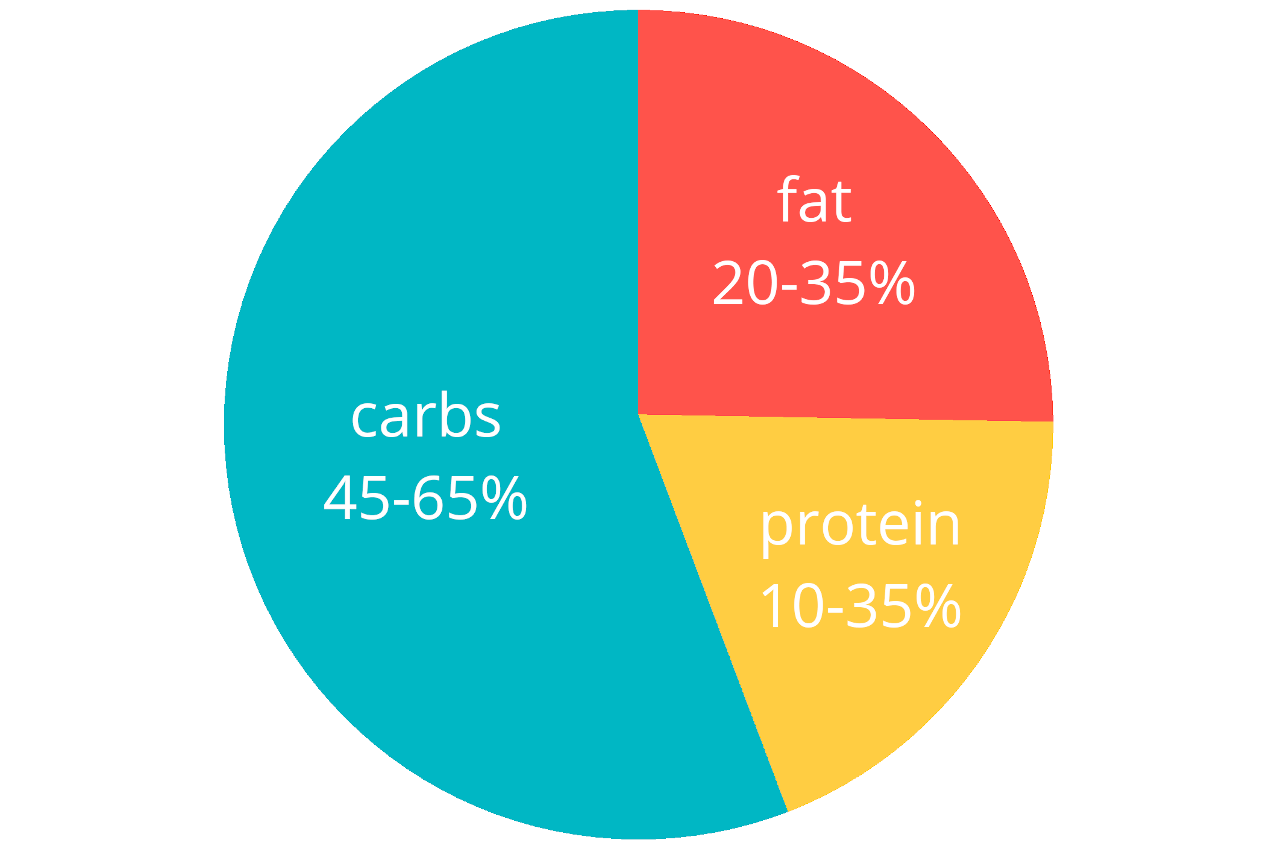
For most, it is safe to adjust carbohydrate, protein and fat consumption to optimize the diet for weight loss. You may find it beneficial to trade a percentage of your calories from carbohydrates or even fat, for protein calories.
As a jumping off point, let’s review the current recommendations for carbohydrates, protein and fat, as well as MyFitnessPal’s default goals for these nutrients:
How Much Carbs, Protein, And Fat Per Day Do You Need?
Also worth mentioning here is the Recommended Dietary Allowance (RDA) for carbohydrates, which is 130 grams per day. This number is based upon the amount of carbohydrates (sugars and starches) required to fuel an adult’s brain, red blood cells and central nervous system. This is important because if we do not get enough carbohydrates from
Posting Komentar untuk "How Many Carbs And How Much Protein Should I Eat To Lose Weight"