Keto Not Losing Weight Constipated
Ah, nothing like talking aboutketo and constipationand bowel habits to start your day! But for many newcomers to the keto diet, constipation can be a real struggle – so it’s something important to talk about.
Clinical evidence shows the Keto Diet may help you lose weight and improve your health. This is why the keto diet continues to be one of the most popular dieting solutions, not only in the US but across the globe.

While our Keto Cooking and Keto Lifestyle Blogs’ main focus is on keto cooking, keto recipes and keto lifestyle, it’s also helpful to touch on some hidden aspects of the keto diet and why this low carb lifestyle can and will affect your body in new and different ways. We know these topics are important to you too on your ket journey.
Keto Diarrhea + Keto Constipation = Keto Poop! Help Is Here
There are several different contributing factors to constipation on the keto diet. Depending on which of these is affecting you, there are simple strategies for each that you can try putting into place:
Fiber is involved in keeping the digestive system healthy and bulking up the stool. The problem? Almost everyone in the United States falls short on meeting their fiber needs. In fact, 95% of Americans don’t meet the recommended fiber intakes, which range from 21 grams to 38 grams per day for adults based on age (source).
This lack of fiber intake is happening for people eating a standard diet, despite that, they have access to abundant fruits, vegetables, whole grains, and beans – all great sources of fiber. But as you can imagine, it becomes much more challenging on a keto diet when many of these sources are restricted.
Reasons Why You're Not Losing Weight On Keto
That said, it is still completely possible to meet your fiber needs on a keto diet, and doing so will help reduce the risk of constipation.
One of the biggest mistakes people may make when transitioning to a keto diet is focusing only on high-fat foods like cheese, oils, fatty meats, etc. Non-starchy vegetables are an essential part of a healthy diet, keto or otherwise. These veggies pack in a lot of fiber without excessive digestible carbohydrates.
If you find yourself constipated, try increasing fiber intake by working some of these low carb, high fiber choices into your meal plan:
Keto Diet Constipation
A quick tip: Increase fiber intake gradually and also increase your fluid intake at the same time. This will help your body adjust, rather than going from a few grams to 30 grams a day immediately.
Falling short on your daily hydration needs is another factor that can increase the risk of constipation (source). This is easy to fix though – simply work to meet your needs each day!
While there’s no one hard and fast amount of fluid that’s “right” for everyone, the Institute of Medicine sets an Adequate Intake level that should be suitable for most people. For men, total fluid intake should be around 3.7 liters per day, and for women, 2.7 liters per day (source).

Keto Flu: Symptoms, Causes & How To Fix It
However, about 20% of fluid comes from the foods we eat. As such, it’s estimated men need around 3 liters per day of fluid they drink, and women need around 2.2 liters per day of fluid they drink.
If you’re dealing with keto constipation, try tracking your fluid intake over a few days and see if you’re meeting your needs. If not, you can try to drink more water to do so. Seltzer water, water infused with cucumber or herbs, and unsweetened tea are also good options on a keto diet to help you meet hydration needs.
When you switch from the standard American diet to a keto diet, your body is forced to quickly adapt to this new way of eating. If you were used to eating many high carb foods, and now you’re only eating many high-fat and protein-rich foods, your digestive system might need a little time to catch up.
Fix Keto Constipation And Boost Metabolism
You can alleviate some of these issues by switching to a keto diet more gradually (though obviously many people prefer not to do that). For some people, following a low carb lifestyle rather than strict keto may be the answer.
It is of course possible for people to follow a keto diet and restore good digestive health, though. Follow the tips above about fiber and hydration, and focus on mostly whole foods on your keto diet. Avoid too many processed keto foods.
:max_bytes(150000):strip_icc()/keto-constipation-ae84bfdc9f7b4d8c8280034d630e5085.jpg?strip=all)
Hopefully, these tips are helpful as you continue on your keto diet! Following them should help support your digestive health, keeping you comfortable as you continue to enjoy your low-carb lifestyle.When you can’t go, it’s hard to feel good. Here’s why the diet may affect your gastrointestinal health, when to worry, and an action plan for tackling symptoms.
How To Stop & Avoid Keto Constipation
If you’ve been following the ketogenic (“keto”) diet, your excitement about the eating plan might be tempered by a common — but not often talked about — side effect: constipation or diarrhea.
“Any time you make a big change to your diet, there’s the chance it will affect your gastrointestinal health, ” says John Riopelle, DO, a gastroenterologist for Kaiser Permanente in Lone Tree, Colorado.
Given that the standard American diet is high in carbohydrates, switching to a keto diet puts you at the opposite end of the spectrum. Based on a typical keto diet food list, this approach is high in fat (70 to 80 percent), moderate in protein, and very low in carbs — many people stick to 20 to 50 grams (g) of net carbs (total carbs minus fiber and sugar alcohols) daily. What’s more, everyone’s colon is unique, which is why some people may be stricken with constipation, others with diarrhea, and some may not notice a change at all, says Dr. Riopelle.
What Is Keto Constipation?
The biggest issue? “When it comes to gastrointestinal symptoms on a keto diet, I worry most about the lack of fiber in the diet, which can lead to constipation, ” explains Lindsey Albenberg, DO, gastroenterologist at the Children’s Hospital of Philadelphia in Pennsylvania. And when you’re allotted so few carbs in your diet, you’re leaving out fiber-rich sources like fruit, vegetables, whole grains, and legumes.

In fact, even without restricting carbs, Americans on average already fall short of their daily fiber quota. According to Harvard Health Publishing, American adults consume an average of 10 to 15 grams of fiber per day, and yet the goal for people up to age 50 is 25 grams of fiber for women and 38 grams of fiber for men each day.
Here’s why that matters: “Fiber is important for colonic health, ” says Riopelle. The organ simply functions better when it has plenty of fiber. “I explain to patients that the primary job of the colon is to be a sponge and absorb all the water you’ve consumed and fluids secreted during the digestive process. Fiber adds bulk to the stool and helps the colon work like a muscle to move things through more easily, ” he says.
Is A Keto Diet The Best Way To Lose Weight?
But instead of constipation, perhaps things are moving through a little too fast, and now you’re constantly running to the bathroom. While diarrhea may not be as common a reaction to the keto diet, it is possible. “There may be a delay in enzymes that digest fat to respond to the increasing amount of fat in your diet. If fat doesn’t get broken down in your small intestine the way it’s meant to, it travels into your colon and gets digested by bacteria that can lead to gas, bloating, and fat in the stool, ” he says. Extra fat in the stool causes a looser stool.
Another potential problem is acid reflux. “Fats take the longest to empty out of the stomach, so they keep people fuller, longer. On keto, delayed stomach emptying may leave your stomach full all the time, triggering abdominal discomfort and an increase risk of regurgitation and heartburn, ” says Dr. Albenberg.
That said, these effects are often short lived. Your gastrointestinal (GI) tract will likely adjust, but the time it takes to do that differs for every person, says Riopelle. Still, there are warning signs that you should see a doctor, which we will discuss in a minute.
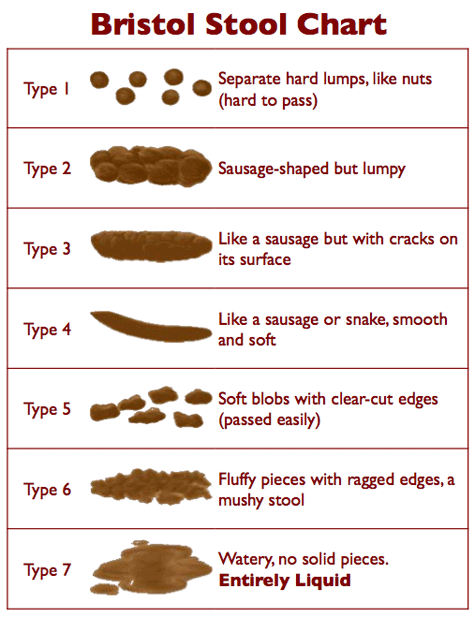
Keto Diet Constipation: Causes And 7 Natural Remedies
Everyone knows that constipation is uncomfortable for sure, but can it harm your health? Aside from the risk of hemorrhoids due to constipation, the issue is that constipation is simply a sign that something’s off in your body, says Albenberg.
Then there’s the potential issue that changing your diet may affect your gut microbiome, the vast network of microorganisms in your digestive tract, which has been linked to immune and metabolic function. The gut microbiome may also play a role in disease prevention and progression, according to research. “Research in animals, and some human data, shows that high fat diets lead to fairly rapid and significant changes in the microbiome. Yet we don’t necessarily know what that means for long-term health, ” says Albenberg. (It’s also important to note that the high-fat diets used in these studies are often Western-type diets that are high in both fat and sugar, so they don’t perfectly replicate the keto diet.) There is also an indication that these changes may be associated with increased inflammation, though it hasn’t been
Posting Komentar untuk "Keto Not Losing Weight Constipated"