Losing Weight Cutting Calories
Facebook Icon The letter F. Facebook Email icon An envelope. It indicates the ability to send an email. Email Twitter icon A stylized bird with an open mouth, tweeting. Twitter Snapchat icon A ghost. Snapchat Fliboard icon A stylized letter F. Flipboard Pinterest icon The letter P styled to look like a thumbtack pin. Pinterest Link icon An image of a chain link. It symobilizes a website link url. Copy Link
If you want to lose fat long term, it's a mistake to try and eat as little as possible and exercise as much as you can, personal trainer Emma Storey-Gordon told .

You will in theory lose fat faster if you eat less, but this is a mistake in the long run. Following a restrictive diet and over-exercising is unsustainable for the vast majority of people, Storey-Gordon said.
Master Weight Loss: Top Cheat Codes & Cutting Tips
Instead, people who want to lose fat should try eating as much as they can while being in a slight calorie deficit, to fuel a healthy, sustainable lifestyle, according to Storey-Gordon.
It's much better to create a 500-calorie deficit you can stick to than try to do a 1, 000-calorie one that leads to overeating, she said.
Equally, trying to go from zero to five workouts a week, or walking 2, 000 to 14, 000 steps a day, is not only likely unachievable for most people, but is unnecessary too, Storey-Gordon said.
Seven Ways To Lose Weight With Minimal Effort, According To Science
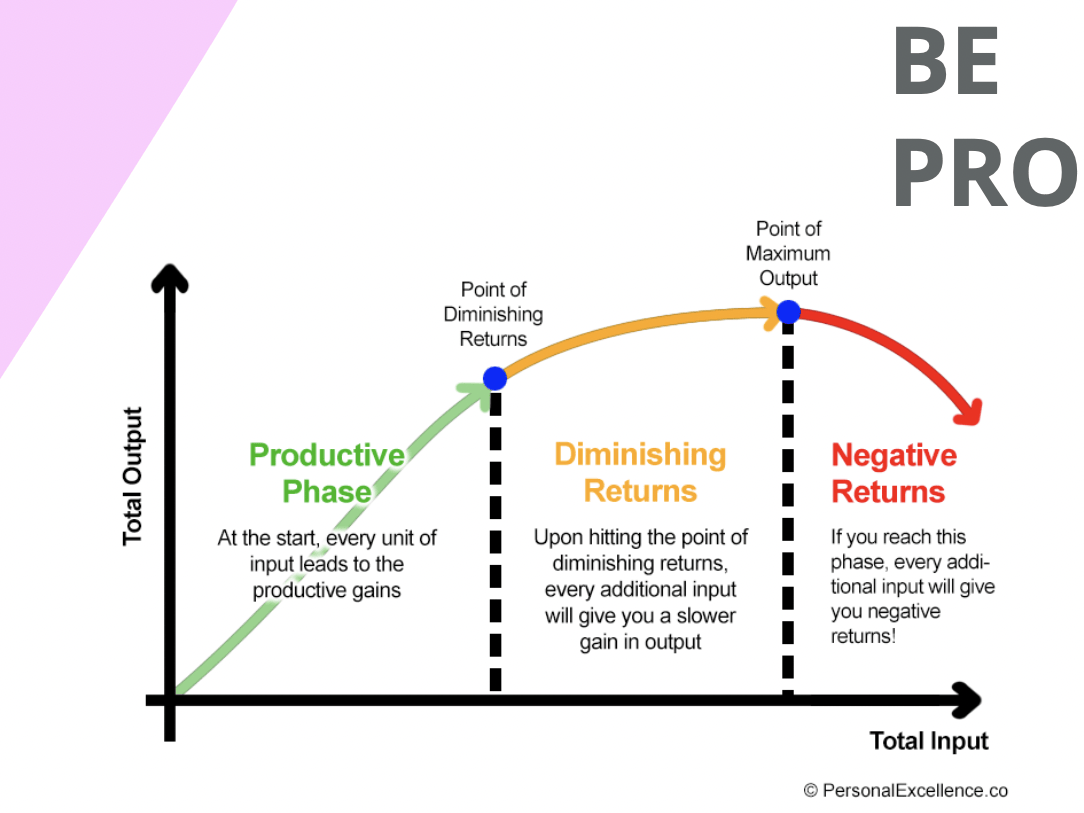
This means the benefit you get from going from zero to one workout a week or 2, 000 to 5, 000 steps a day is far greater than if you go from four to five workouts a week or 11, 000 to 14, 000 daily steps, she said.
For example, a 2019 study assessing the step-count of nearly 17, 000 older American women over four years found that walking 4, 400 steps a day was linked to a significantly lower mortality rate than walking 2, 700. Mortality rate is the number of people in a certain group who die in a given time.
Whether for health or fat loss, you get the most bang for your buck in that first bit of exercise you do, and most people need to do far less than they think, she said.
How To Lose Weight And Keep It Off
That first one hour of exercise every week is so beneficial, and then you have this law of diminishing returns above that, Storey-Gordon said. You still get a benefit from each additional hour of exercise, but it's way less than the first one where you get a huge benefit for the unit of time.
If you over-train, however, and don't give yourself enough recovery time between workouts, you may actually slow your fitness progress too. Equally, if exercising more in the hope it will aid weight lossis making you ravenous andstruggle to stick to your calorie deficit, it maybe counterproductive, Storey-Gordon said.
People can worry they won't lose weight or improve their fitness if they can't fit their fourth weekly workout in, for example, or worry about not being able to do what they think might be optimal, but they shouldn't, Storey-Gordon said.
Cutting Calories To Lose Weight: 5 Daily Habits That Work
The concept applies to both workouts and diet, Storey-Gordon said: Don't worry about supplements, just focus on having three balanced meals and perhaps a snack or two per day.Eating a variety of fruits and vegetables, fiber-rich starch, lean plant and animal proteins and heart-healthy fats can help people stay on the calorie-restriction diet.Getty Images stock
Even healthy, young, slim people can benefit from cutting 300 calories a day from their diet — a simple lifestyle change that can lead to a big payoff in heart health, a new study has found.

People who followed the calorie-restriction diet for two years had a lower blood pressure, lower total cholesterol, lower risk of metabolic syndrome and improvements in insulin sensitivity, researchers reported Thursday in The Lancet Diabetes & Endocrinology.
Portion Control: Simple Ways To Cut Calories For Weight Loss
They also lost an average of about 16 pounds, 71% of which was fat. It’s the first medium-term study of calorie restriction in humans.
“The message from this paper is: Anything is better than what we’re doing now. Even more modest caloric restriction may have benefits, ” Dr. William E. Kraus, the lead author, a cardiologist and professor at the Duke University School of Medicine, told .
The study followed 218 people who were randomly assigned to either cut 25% of calories from their regular diet for two years, or to continue eating just as they always had during that period.
Cutting Diet: The Fastest Way In The World To Lose Fat
The participants were 21-50 years old, healthy and slim or slightly overweight. Various aspects of their health were measured at baseline, including blood pressure, cholesterol, metabolic syndrome risk and insulin resistance.
The people who followed the diet had their meals prepared at clinical centers for the first month to understand what a 25% reduction in daily calories looked like. They were also counseled on the basics of calorie restriction — eating a 6-ounce steak rather than an 8-ounce cut, for example. But the researchers didn’t try to change their basic underlying diet, Kraus said.
The dieters were asked to maintain the 25% cut in their daily calories for two years, but they averaged only about half that, 12% — amounting to eating 300 fewer calories a day. Even with that reduction, their cardiometabolic risk factors were “significantly reduced, ” the study noted. They also lost about 10 percent of their body weight, most of it fat.
Cutting Calories: 5 Ways To Cut Calories To Lose Weight
“It’s not all just due to the weight [change]. There is something else about restricting calories that seems to have benefits on cardiometabolic factors that we don’t really understand.”
But the study also showed how challenging it is for people to eat less over the long term, noted Dr. Frank Hu, chair of the department of nutrition at the Harvard T.H. Chan School of Public Health.
Their dropout rate was more than three times higher than that of people in the control group. The strategy also required reliably counting calories every day.
Carbs Or Calories: What Should You Focus On For Weight Loss? Experts Reveal
Combining calorie restriction with other strategies like intermittent fasting, a low-carb diet or the Mediterranean diet could help people stick with a healthy lifestyle that ensures a lean body over the long term — “the optimal way to promote longevity, ” Hu wrote in a commentary that accompanied the study in The Lancet Diabetes & Endocrinology.
“That will usually take care of the problem, ” he said. “People come to my clinic and tell me they have a bowl of ice cream before they go to bed and I just have a fit because those calories are not going to be used — they’re going to be stored — and it’s excess caloric intake they don’t need.”

The calorie-restriction diet can take a lot of mental focus and discipline to maintain, but can be achieved by eating a variety of low-calorie fruits and vegetables, fiber-rich starch, lean plant and animal proteins, and heart-healthy fats, noted NBC News Health and Nutrition Editor Madelyn Fernstrom.
Easy Ways To Cut Up To 500 Calories
A. Pawlowski is a health reporter focusing on health news and features. Previously, she was a writer, producer and editor at CNN.If you've ever Googled, Is diet or exercise more important for weight loss? you've probably come across this seemingly arbitrary formula for dropping pounds: It's 80 percent diet and 20 percent exercise. But where did that 80/20 ratio come from? And what does it
The key to weight loss is achieving a negative energy balance, or taking in less calories than you burn, says Albert Matheny, R.D., C.S.C.S., co-founder of SoHo Strength Lab and PROMIX Nutrition. To shed a single pound, you need to achieve a 3, 500 calorie deficit. So if you're following the 80/20 ratio, you'd want to burn approximately 750 calories through exercise and cut an additional 3, 000 calories through dieting, says Matheny. That’s a total deficit of 3, 750 calories for the week.
The reason dieting is so much more effective than exercise is because it takes a ton of activity to create a 500 to 700 calorie deficit through working out. Essentially, you’d need to run seven to 10 miles a day to lose one pound a week, says Holly Lofton, M.D., an assistant professor of medicine and director of the weight management program at New York University's Langone Medical Center. The average person can’t keep this up, especially without increasing their caloric intake.
I'm Doing Everything Right, But I'm Still Not Losing Weight. What's Going On?
“I see this in patients all the time, ” says Lofton. “People think, ‘If I run the marathon or start going to boot camp, I’m going to lose weight’ but they’re often disappointed when they don’t.”
You don't need to hit an exact 80/20 ratio to shed pounds, but it is important for people to focus primarily on diet when they're trying to lose weight. You can lose weight without exercise, but you cannot lose weight if your nutrition counteracts your energy expenditure through exercise, Matheny says.

Sure, it’s much easier to create a 500-calorie deficit through diet alone than it is to burn 500 calories through exercise, says Lofton. But when you combine a sweat sesh and a healthy diet, you don't have to make many dramatic changes at all. For example, instead of eliminating 500 calories by painstakingly striking all dairy from your
Posting Komentar untuk "Losing Weight Cutting Calories"