If I Lose Weight Will I Lose Body Hair
You’ve been putting in the hard work — eating right, exercising consistently — and now you’re seeing the fat melt off and muscles emerge in its place. But have you ever wondered what’s happening to your body when you lose weight?
Find out all the amazing and complex things that are occurring in your body when you transform yourself from couch potato to lean, mean fighting machine!

The fundamental principle behind weight loss is dead simple: Burn more calories than you consume. Restricting calories forces your body to draw on existing fat stores to power your bodily functions, everyday activities, and workouts.
How Much Fat Can You Lose In One Week? (and How To Do It)
Since your weight is essentially a form of stored energy (read: calories), it will gradually shrink and your body will shrink with it — in a good way, of course.
The first step of your weight-loss journey is figuring out your ballpark calorie goal. Most Beachbody programs come with a calculator that you can use to figure out how many calories you should be eating, or you can also use this handy online calculator.
A Google search will also reveal many different formulas to help you tally up calories for BMR, activity, and exercise, but there’s one method to calculate “calories for weight loss” that refuses to die:
Reasons It's Harder To Lose Weight With Age And What To Do About It
It’s called the 3, 500 Calorie Rule, which basically states that if you cut 3, 500 calories from your diet per week, you lose one pound. Simple, right? Not exactly.
This general guideline has been shown to underestimate multiple factors and may set up unrealistic expectations. Because in reality, your body will eventually fight back against weight loss. Your brain knows why you’re cutting calories, but your body doesn’t, so it does everything it can to conserve energy. (think: slowing metabolism).
Experts recommend you lose weight at a steady one to two pounds per week. But you may experience more than that during the “honeymoon phase” at the start of your weight-loss journey because you’re highly motivated and your body hasn’t adapted to the changes you’re imposing on it — yet.
How To Lose Weight Fast In One Week? Drop 2 Kg In 7 Days
You’ve picked out a solid strategy to lose weight by establishing healthy habits, following a balanced nutrition plan, and working out regularly.
All of this helped you create a calorie deficit for most days of the week. Sensing this but still want to give you the energy you need, your body breaks down its sources of stored energy, most of it fat, but some of it glycogen.
Glycogen is a storage form of carbohydrates mostly found in your liver and muscles. It’s broken down into glucose when your blood sugar dips or if you exercise intensely. Glycogen is stored with water and when it’s converted to glucose for your body to use, the water goes with it, which is why most people experience rapid weight loss in the first week.
The Real Reason You Can't Lose Weight
Depending on how much weight you have to lose and how severely you restrict your food intake, this rapid loss of fluid will vary. But don’t be worry — you’re still losing some of this weight as fat!
In the first month, you’re losing it all: fat, water, glycogen, and even muscle tissue, depending on what activities you’re doing to lose weight. As you slim down, individual fat cells get smaller and smaller. The fats stored in the cells are shipped out and metabolized as fuel by your internal organs. This involves a series of chemical reactions where energy is extracted at each step.
So, where does the fat actually go? The end waste products of this reaction are carbon dioxide and water, so you’re actually breathing most of it out, with the rest leaving your body via urine, sweat, and other bodily fluids.
Weight Loss: How Much Weight Can You Lose Safely In A Month?
But what about those darn fat cells? Sorry, folks, but you’re stuck with them. Everyone’s body contains a set number of fat cells. When they get smaller, they release less leptin, the hormone that tells your body that it’s full. And when your leptin levels dip, that means your tummy starts rumbling for more grub.

Sadly, this is one of many factors that make losing weight challenging. But there is a solution: Add more fiber (think: fruits, veggies, whole grains) and lean protein to your diet. These types of food will help you feel more satiated.
Want to lose. The solution: Include a consistent strength-training routine as well as high-intensity interval training to your weight-loss plan to help maintain muscle mass.
What Happens When You Lose Weight
Complex math, biology, and physiology aside, remember not to lose sight of the bigger picture: Everything that you’re doing is in service to your overall health and happiness. So don’t sweat the details (too much) and focus on creating a healthy, sustainable lifestyle.Which protocol is going to cause the most weight loss? The most fat loss? And what’s going to happen to your muscle mass?
There are two studies that answer that question. But before we go over the results, try and guess what would happen. I think it could be fun to test your intuition.
In this 12-week study, the researchers split the participants into three groups: no exercise, a fitness routine, or a lifting routine. Each group was put on a weight-loss diet.
Natural Ways To Lose Weight
What’s interesting about this study is that it showed equal weight loss between all three groups. The degree of the calorie deficit determines the rate of weight loss. No exercise required.
But as soon as we look at body composition, the story changes. If you lose weight without exercising, about 1/3 of the weight you lose is muscle. In fact, the same is true with weight gain. If you gain weight without exercising, about 1/3 of the weight you gain will be muscle. That’s why overweight men have so much more muscle mass than skinny guys. Simply gaining weight results in muscle gain.
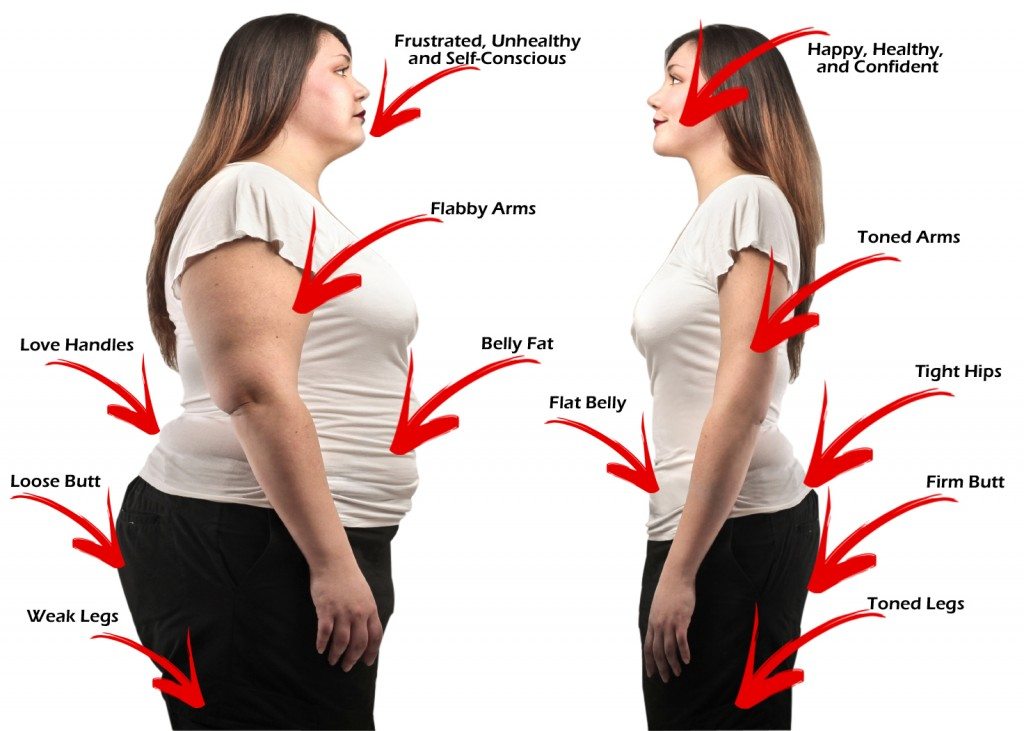
This is why exercise is so important for body composition. Doing exercise while losing weight allows people to lose a little more fat and retain a bit more muscle.
Can You Lose Fat While Pregnant? (the Honest Truth About Weight Loss)
This allows us to answer the question we posed at the beginning of the article. You can lose weight perfectly well with just diet alone. However, if you want to lose more fat, then you should add in exercise. And if you want to build muscle while losing even more fat, you should also lift weights.
Somehow cardio has gotten itself associated with weight loss, whereas lifting weights is associated with building muscle. And, I mean, there’s good reason for that. Cardio burns more calories than lifting weight (study) and lifting weights is better for building muscle (study). These findings don’t change that.
Ultimately, I want to build some muscle and become stronger. However, I’m a little skinny-fat, so I’ve been doing some cardio and trying to lose weight. But when I’m done losing weight, I’m going to start lifting weights so that I can build some muscle.Sincerely, A Skinny-Fat Guy
Lose Weight The Healthy Way With 25 Tips From Registered Dietitians
This (fictional) guy is a great example of that. He wants to lose fat and build muscle, so he’s doing cardio to lose the fat, and then he’ll lift weights to build the muscle.
A smarter approach, though, would be to lift weights while losing weight. That way he can gain some muscle while burning more fat. When he finishes losing weight, he’ll not only be leaner, he’ll also be bigger and stronger.
However, another thing to consider is the fact that this fictional guy is succeeding at losing weight and improving his cardiovascular health. Is it a 100% optimal routine? No. But it’s a whole lot better than nothing.

Full Body, No Equipment Exercises For Weight Loss
Switching to building muscle, more power to them. There’s plenty of time to build muscle later. The important thing is progress, right?
We give skinny guys similar advice. If their main goal is to bulk up, they should start by lifting weights. If they want to lift weights
Lose muscle. Muscle has a certain amount of memory to it. It sounds like pseudoscience, but larger muscles require more nuclei, so as you build bigger muscles, your muscle fibres gain more nuclei. Then, when you lose muscle, those nuclei stick around. It’s a permanent adaptation.
How Losing Weight Affects Your Body And Brain
Building muscle is analogous to adding new rubber to a balloon, making the balloon structurally bigger. Then when you lose muscle, your muscles don’t “shrink, ” they just “deflate.” You still have that bigger balloon. Blow some air into it and, poof, you’ve got big muscles again.
So even if you lose muscle, it doesn’t matter that much. When you start trying to bulk up, it will spring right back.
Alright, that’s enough for now. If you dug this article, we’ve got a full skinny-fat guide over on Bony to Beastly. I think you’ll dig that article even more.
Where Does Fat Go When You Lose Weight?
Posted in Fitness & Lifestyle and tagged burning calories, exercise and fat loss, lifting and fat loss, lifting weights to lose weight, muscle memoryIf you've been struggling to transform your body and you're not sure what type of training you should do this is for you!

Now before I jump into the training aspect, I want to be completely clear that no training will outperform a focus on healthy nutrition habits (like protein every meal, drinking half of your body weight in ounces of water per day, and eating 4
Posting Komentar untuk "If I Lose Weight Will I Lose Body Hair"