Ibs Diet Lose Weight
We are at the time of year where new weight loss fads and diet trends cycle through our news feed. Given the low FODMAP diet involves dietary restriction; some of you might be wondering or have come across in social media, whether the low FODMAP diet can be used for weight loss.
Weight loss is not the point of the low FODMAP diet; it is to help those with IBS achieve symptom relief; and the end goal of living life with minimal dietary restrictions and symptom management.
So, while keeping this in mind, on today’s blog, we will be switching gears, focusing more on what a healthy lifestyle may look like and how you can apply this while following a low FODMAP diet.
The Low Fodmap Diet: A 'liberating' Route To Ibs Relief
The low FODMAP diet is not a weight loss diet; in fact, some dietary trends could potentially be doing harm when it comes to IBS symptoms. Check out our Fad or Foe blog post exploring the impacts of fad diets like juice fasts on IBS symptoms for more on this.
Here at FODMAP Friendly we believe in being healthy at every size, because healthy behaviours are more indicative of health than actual body size. Like the saying, don’t judge a book by its cover, you can’t judge someone’s health by just looking at them.
In saying this, if weight loss is your goal and you have IBS, seek out the help of an IBS & FODMAP trained Dietitian, who will be able help you do this safely, without implications to your IBS.
Can Ibs Cause Weight Gain And What Can You Do About It
There’s no special pill to guarantee longevity, in reality it involves making small changes and being able to turn those changes into habits. So here are some things you can do to work towards a more healthful life while following a low FODMAP diet.
Regular exercise does wonders for your overall physical and mental health; it can reduce chronic disease risk and help keep us strong and moving throughout our life.
Aiming for 30-40 minutes of movement 3-4 times a week, including resistance training ensures you’re on track to get all the benefits of exercise. Always remember that any exercise is better than no exercise, so if your goal is to join the 10, 000 step club or run 10km you’re kicking goals.
How To Lose Weight With Ibs
Using exercise to our advantage Whilst there are mixed feelings about exercise and IBS, you can use it to your advantage to manage symptoms. The key is low-to-moderate exercises such as: walking, yoga or leisurely swimming; even stretching works by massaging and relaxing your digestive organs. From there, if you feel comfortable, you can build up the intensity.
Our body is about 70% water so it’s important to keep fluids up. Dehydration occurs when you lose or use more fluid than you take in. A general rule of thumb is to aim for at least 2L of water a day. If you regularly experience diarrhoea or constipation this is a bare minimum.
If you’re losing more fluid than a regular bowel movement (like with diarrhoea) you need to drink extra water to make up for it. On the other hand, constipation can be a sign of dehydration, where if you don’t have enough water in your body, it can result in hard and difficult to excrete stools.
Lose Weight For Good: Low Fodmap Diet For Beginners: Complete Plan For Managing Symptoms Of Ibs, Crohn's Disease, Coeliac Disease And Other Digestive Disorders: Amazon.co.uk: 9781912155972: Books
When you’re undertaking the low FODMAP diet, there is a lot to think about. One easy tip is to get into the habit of taking a water bottle everywhere; it acts as a helpful reminder and has the ease of convenience.
There’s an immense amount of research supporting the health benefits of a diet rich in fruit and vegetables, specifically aiming for 2 fruit and 5 vegetables.

Fruits and vegetables contain important vitamins, minerals, plant chemicals which are fundamental for our body to function. Aiming to eat a rainbow daily can help you achieve that 7-a-day.
Weight Management Diet When You Have Ibs
Fruits and vegetables also provide dietary fibre and some prebiotics, which are important for digestive and gut health. Whether you have IBS-related diarrhoea or constipation, the right amount and type of fibre can help either soften stools or add bulk to ease bowel movements.
But wait, don’t fruits and vegetables have FODMAPs? Some fruit and vegetables contain FODMAPs such as onions, cauliflower, mushrooms, apples and watermelon. But, there are so many yummy low FODMAP fruits and vegetables for you to enjoy.
Check out our Your Low FODMAP Shopping List blog post for some handy fruit and vegetable swaps to add to your shopping list.
Healthy Weight Loss Foods For Weight Watchers With Ibs
You also don’t have to miss out on prebiotics on a low FODMAP diet, our website have listed FODMAP Friendly certified prebiotics AND probiotics available.
During sleep, your body works to recover, repair and support brain development. When you don’t get enough sleep (that is 7-9 hours), it can impact your mood and ability to think, concentrate and perform everyday tasks.

Those with IBS can be more susceptible to having a poorer night’s sleep whether this is due to increased stress and anxiety around symptoms or gastrointestinal symptoms themselves. Getting enough sleep while undergoing the low FODMAP diet is a way you can look after your health and support your body.
Ibs And The Low Fodmap Diet
The brain has a direct link to the gut and vice versa, so if your brain is sending out stress signals, it’s likely that this is trickling down to the gut, potentially exacerbating IBS symptoms. By managing stress, especially when undergoing the low FODMAP diet, it can assist in the efficacy of the diet as well.
The low FODMAP diet is not intended as a weight loss diet. It is about empowering you to get in control of your IBS symptoms. What’s more important is living a healthful life full of regular exercise, staying hydrated, having your 7-a-day and managing sleep and stress while following a low FODMAP diet and beyond.
Having an IBS & FODMAP trained Dietitian in your corner while undergoing a low FODMAP diet can help answer questions and even tailor advice to help you to work towards adopting a healthier lifestyle.When you hear people say the word ‘diet’, it’s only normal to think that you need to eat lots of vegetables and fruit, and have no chocolates or sweets. The word ‘diet’ has been morphed into something which is commonly associated with weight loss, but not all ‘diets’ are developed for just that one goal! The low FODMAP diet was specifically developed with the overall aim of reducing gastrointestinal symptoms (such as bloating and stomach pain) associated with Irritable Bowel Syndrome (IBS), rather than promoting weight loss. IBS is a bowel disorder associated with abdominal pain, bloating, excessive flatulence and a change in stool type/consistency. These symptoms occur in those with IBS who have difficulties absorbing certain carbohydrates (which we refer to as FODMAPs) within the intestines.
Changes You Should Not Ignore If You Have Ibs
Whether or not you are following a diet, minor weight changes/fluctuations are generally considered as normal. Each day we eat different foods in differing amounts, we drink a different amount of water, and we may go to the bathroom less or more, all of which to an extent, impact your weight.
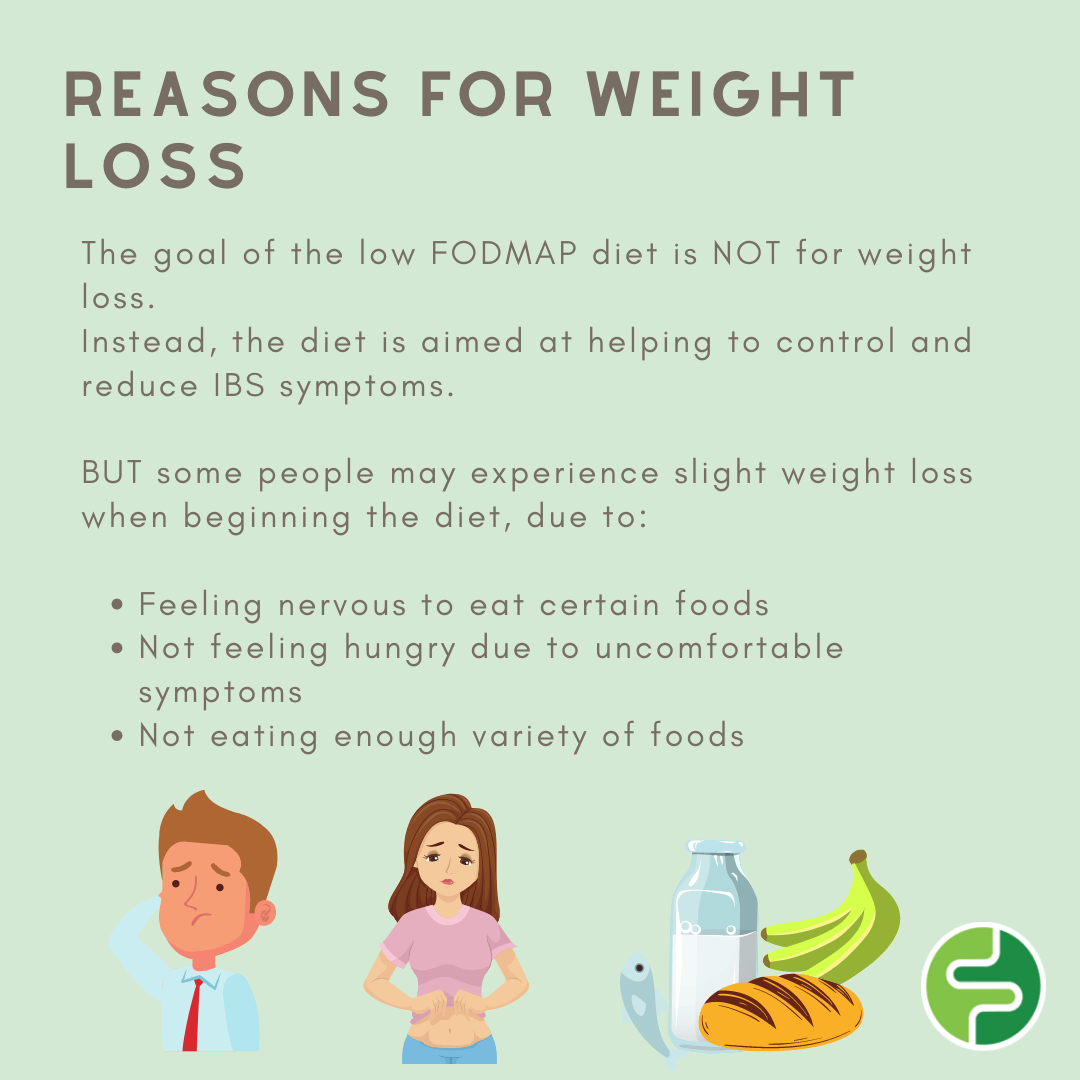
It’s important to clarify that the goal of the low FODMAP diet is not for weight loss at all. As mentioned, the diet is aimed at helping to control and reduce IBS symptoms by identifying and eliminating possible trigger foods. Some people may experience slight weight loss when beginning the diet, due to various reasons.

Firstly, ensure it has been confirmed that you have IBS by speaking to your doctor or gastroenterologist. If other diseases have not yet been ruled out from your GP (e.g. Coeliac Disease, Inflammatory Bowel Diseases, Bowel Cancer), it is very important to seek medical advice before starting the diet. Weight loss can occur in many other gut-related conditions like coeliac disease, so it is vital to make sure you have been tested for these as the medical management and treatment of these conditions are different to IBS management.
Complete Guide To The Whole Food Diet: Lose Excess Body Weight While Enjoying Your Favorite Foods
There are some potential reasons as to how weight loss may occur whilst following the diet, providing other gut-related conditions have been ruled out:
1. Have you ever been nervous to eat a food in fear that it may cause unpleasant symptoms, and would rather stay hungry? Fear of food is a big one! Avoidance of foods can result in eating a lot less than usual and this may mean that your body doesn’t have enough fuel to maintain weight. So how do you know what foods you can eat on the low FODMAP diet? By using the FODMAP Friendly App, this takes the stress out of not knowing what foods may cause you symptoms. By simply searching the type of food, the App will tell you whether a food is low FODMAP. We are regularly updating the App to have the most up-to-date information.
2. Not feeling hungry due to unpleasant symptoms? Abdominal pain, flatulence and constipation/diarrhoea can all affect your appetite and therefore, the amount of food you eat. If this is occurring, seek out advice from a FODMAP trained dietitian to aid you in your IBS journey. A dietitian will help recommend suitable portion sizes, meal timings and food combinations to help maintain a regular
Posting Komentar untuk "Ibs Diet Lose Weight"